
The holographic character can be visually tailored to the surroundings. Think of colour use and supporting animations. The plinth can also be executed in the brand identity.
The look must suit the target group. A playful character can work well for children, while a business reception location usually calls for a calmer and professional form.
Not only the appearance determines the personality. Voice, word choice and form of address are also important.
The hologram can, for example:
The AI hologram can use information about products, services, locations, lessons or procedures. That knowledge must be clearly supplied and regularly updated.
A good knowledge source contains not only answers, but also boundaries. Define which topics the system does not address and when someone should be referred to an employee.
The same hologram can take on different roles. Think of a receptionist, teaching assistant, museum guide, product expert or facilitator during a role-play.
Each role needs its own instructions. A broad assignment like “answer all questions” is too vague and leads more quickly to unusable answers.
The available languages, level of difficulty and amount of explanation can be tailored to the users. Test every chosen language and role with real-world situations before the hologram is used independently.
Media Hologram helps with the character, the knowledge source, conversational style and holographic installation. Take a look at LEXIE A.I. or plan a demonstration to discuss your application.
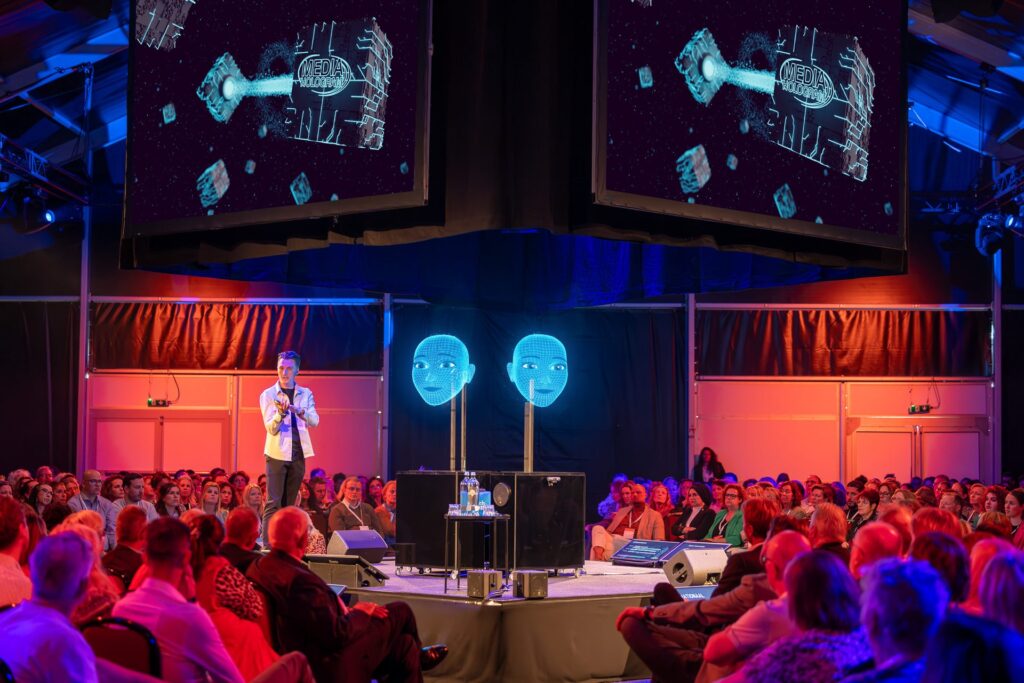
The holographic character can be visually tailored to the surroundings. Think of colour use and supporting animations. The plinth can also be executed in the brand identity.
The look must suit the target group. A playful character can work well for children, while a business reception location usually calls for a calmer and professional form.
Not only the appearance determines the personality. Voice, word choice and form of address are also important.
The hologram can, for example:
The AI hologram can use information about products, services, locations, lessons or procedures. That knowledge must be clearly supplied and regularly updated.
A good knowledge source contains not only answers, but also boundaries. Define which topics the system does not address and when someone should be referred to an employee.
The same hologram can take on different roles. Think of a receptionist, teaching assistant, museum guide, product expert or facilitator during a role-play.
Each role needs its own instructions. A broad assignment like “answer all questions” is too vague and leads more quickly to unusable answers.
The available languages, level of difficulty and amount of explanation can be tailored to the users. Test every chosen language and role with real-world situations before the hologram is used independently.
Media Hologram helps with the character, the knowledge source, conversational style and holographic installation. Take a look at LEXIE A.I. or plan a demonstration to discuss your application.