A single-sided setup is designed for visitors who come mainly from one direction, with a viewing angle of 180 degrees. Think of a hologram against a wall, in a shop window or at the back of an exhibition stand.
This setup is often logical when the walking direction is clear and the back does not have to be visible. The available space can thus be used efficiently.
In a double-sided setup, two displays are combined. This makes the holographic content visible from both sides and creates a much wider total viewing angle of 340 degrees.
That is interesting for:
Above all, look at the flow of visitors. If people almost always come from the front, a second side may add little. If the hologram stands in the middle of a space or on the corner of an exhibition stand, double-sided visibility can make a big difference.
The content must also work well on both sides. Sometimes the same animation can be used. In other situations it is stronger to give each side its own product or message.
A double-sided setup requires more space, hardware and coordination. The plinth must support both displays and cables must be neatly tucked away. The simultaneous playback of the content must also be set up properly.
Double-sided is not automatically better. Wrong placement makes the extra viewing angle pointless. A floor plan or photo of the location is often enough to determine in advance which version makes the most sense.
Media Hologram supplies both single-sided and double-sided hologram setups. Request advice for your trade show, shop or showroom.
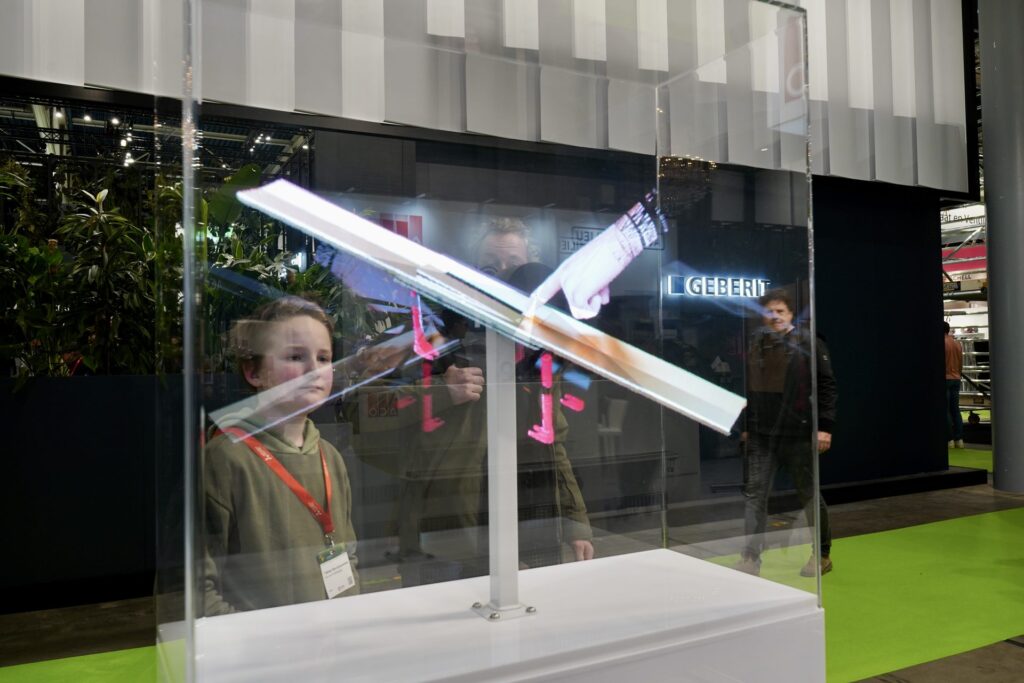
A single-sided setup is designed for visitors who come mainly from one direction, with a viewing angle of 180 degrees. Think of a hologram against a wall, in a shop window or at the back of an exhibition stand.
This setup is often logical when the walking direction is clear and the back does not have to be visible. The available space can thus be used efficiently.
In a double-sided setup, two displays are combined. This makes the holographic content visible from both sides and creates a much wider total viewing angle of 340 degrees.
That is interesting for:
Above all, look at the flow of visitors. If people almost always come from the front, a second side may add little. If the hologram stands in the middle of a space or on the corner of an exhibition stand, double-sided visibility can make a big difference.
The content must also work well on both sides. Sometimes the same animation can be used. In other situations it is stronger to give each side its own product or message.
A double-sided setup requires more space, hardware and coordination. The plinth must support both displays and cables must be neatly tucked away. The simultaneous playback of the content must also be set up properly.
Double-sided is not automatically better. Wrong placement makes the extra viewing angle pointless. A floor plan or photo of the location is often enough to determine in advance which version makes the most sense.
Media Hologram supplies both single-sided and double-sided hologram setups. Request advice for your trade show, shop or showroom.